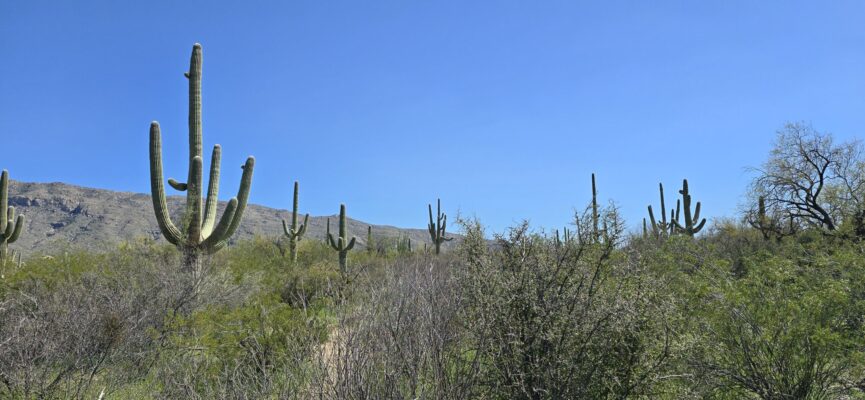
 The saguaro (suh-waa-row), also known as the giant cactus, has been an iconic symbol of the American southwest for ages. These majestic beings are easily recognized by their size and structure, sometimes reaching a height of 50 feet tall. They are native to the Sonoran Desert and do not grow naturally elsewhere.
We visited Saguaro National Park in late March 2024 while staying at the Tombstone Territories RV Resort in Huachuca City, Arizona, about a one-hour drive from the park. The Saguaro National Park has two districts – Rincon Mountain District and Tucson Mountain District – that are separated by the City of Tucson. We visited the Rincon Mountain District on the east side of Tucson, as that was closest to us.
We started our visit at the Rincon Mountain Visitor Center where we were fascinated to learn how long it takes a Saguaro cactus to grow. Branches normally begin to appear when a saguaro reaches 60 to 75 years of age. When a saguaro reaches 35 years of age, it begins to produce flowers. An adult saguaro is generally considered to be about 125 years of age. It may weigh 2 or more tons and be as tall as 50 feet. The average life span of a saguaro is probably 150 – 175 years of age. However, biologists believe that some plants may live over 200 years.
From the visitor center we drove the Cactus Forest Scenic Loop Drive which is a winding paved road that features several trailheads, scenic vistas and pullouts in a total of 8 miles. We stopped at the Mica View picnic area to enjoy our lunch in the middle of the Sonoran Desert. From the picnic area continued down the scenic drive to the Desert Ecology Trail, a 1/4-mile paved trail with information exhibits along the way about the plants and animals that comprise the Sonoran Desert ecosystem. While the saguaro cactus is the undoubted star of the park, there are a large variety of other plants in the Sonoran Desert. We particularly enjoyed seeing the Teddy Bear Cholla (not nearly as cuddly as its name!), and the elegant ocotillo.
At the southern tip of the scenic loop road, we reached the 1-mile-long Freeman Homestead trail and followed it to the site of an old homestead foundation. There wasn’t much evidence left of the homestead, but the trail was enjoyable and took us through a grove of large saguaros and a desert wash.
Photos of our visit are provided below. Click on the thumbnails to view the photos.